
Queens Court
Women’s basketball has exploded, yet fans are still underserved.
A concept platform designed to make women's basketball content easier to discover, follow, and personalize.
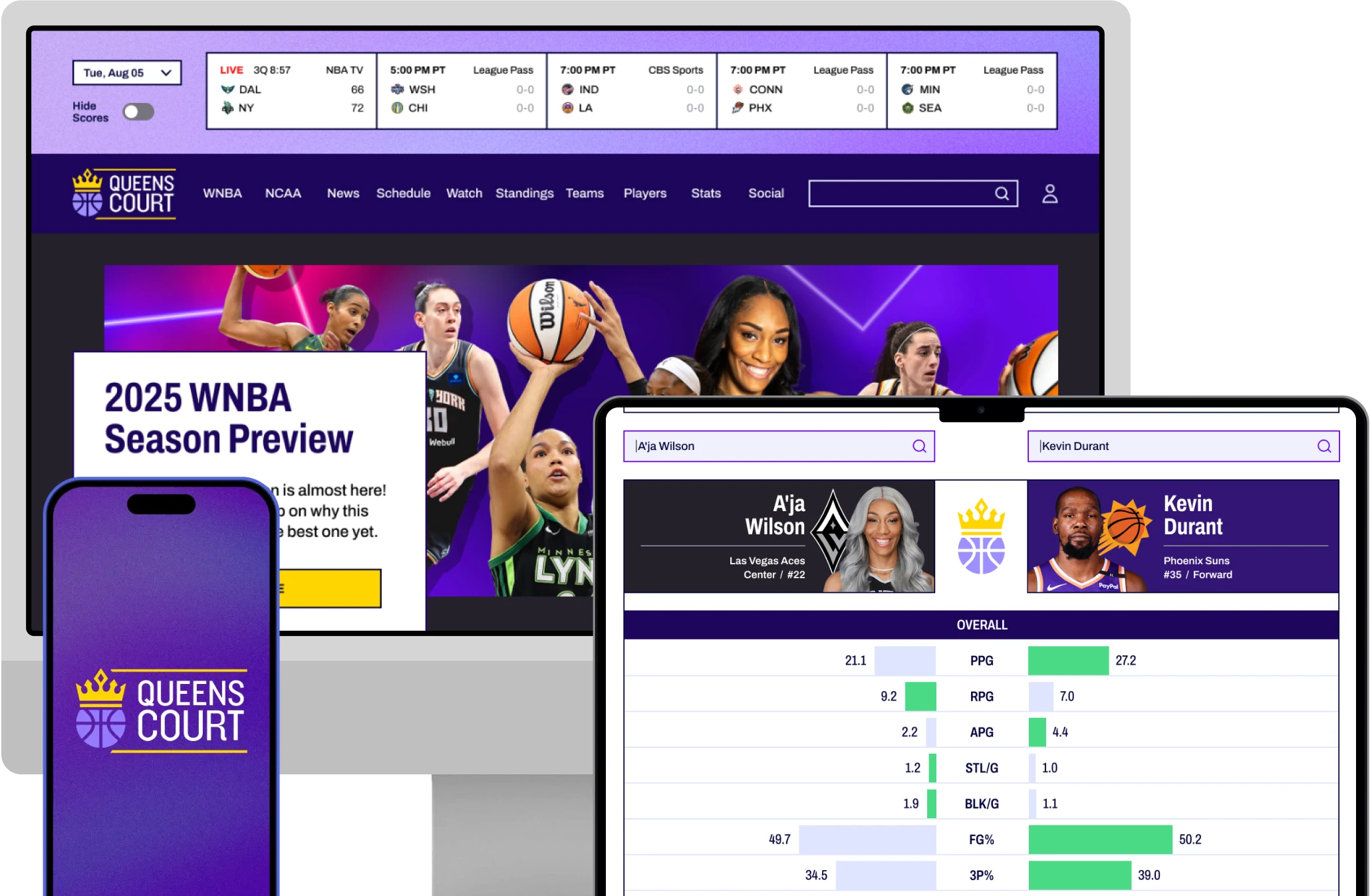
Queens Court is a concept platform dedicated to women's basketball fans, bringing scores, headlines, player statistics, and personalized content into one experience. It was designed to make women's basketball content easier to discover, follow, and engage with.
As an independent concept project, I conducted user research, defined the product strategy, and designed an end-to-end responsive experience. Research shaped three key product decisions: prioritizing the MVP, organizing the experience around personalization, and creating a player comparison tool to encourage deeper fan engagement.
Role
Product Designer (Independent Concept Project)
Responsibilities
Product Strategy, UX Research, Information Architecture, UX/UI Design, Interactive Prototyping
Tools
Figma, FigJam, Maze, Notion, Google Meet, Adobe Creative Suite
Duration
4 weeks
I led the project end to end, from identifying the opportunity through user research to defining the product strategy, information architecture, and final responsive prototype.
Research Insights
Fan interest is growing faster than media coverage.
Women’s basketball has experienced significant growth in recent years, with increases in viewership, attendance and social engagement across both the WNBA and NCAA. Fans are showing up in record numbers and female athletes consistently generate high levels of online engagement.
US Sports Media Gap
Women’s sports only receive a fraction of mainstream media coverage. In the U.S., it accounts for just 8% of total sports media coverage, leaving fans to rely on fragmented platforms and manual searches to follow teams, players and stories they care about.
There’s a disconnect between growing interest and limited visibility. This presents a clear opportunity.
Men
Women
Pro Sports
92%
8%
NCAA Division 1
47%
53%
What women’s basketball fans say
I interviewed five women's basketball fans to understand how they discover, follow, and engage with women's basketball content.
Across interviews, fans consistently expressed frustration with fragmented coverage and ineffective algorithms. This solidifies the need for products built specifically to support women’s sports.
Competitive landscape
Existing women's sports platforms successfully deliver news, highlights, and schedules, but they rarely provide the depth of content fans described during research. Across competitors, I found a consistent gap in player statistics, comparative analysis, and personalized experiences – creating an opportunity for Queens Court to differentiate beyond news coverage.

Dedicated platform for women’s sports fans
Latest news and highlights exclusive to women’s sports
No athlete spotlights and stories
No in-depth statistics and analysis
Live game or match schedules and scores
No mobile-first app

Dedicated platform for women’s sports fans
Latest news and highlights exclusive to women’s sports
Athlete spotlights and stories
No in-depth statistics and analysis
Live game or match schedules and scores
No mobile-first app

Dedicated platform for women’s sports fans
Latest news and highlights exclusive to women’s sports
Athlete spotlights and stories
No in-depth statistics and analysis
No live game or match schedules and scores
No mobile-first app

Dedicated platform for women’s sports fans
No latest news or highlights exclusive to women’s sports
No athlete spotlights and stories
No in-depth statistics and analysis
No live game or match schedules and scores
No mobile-first app
Research revealed three core problems
Fragmented coverage
Content is scattered across platforms, forcing fans to dig through men’s sports in order to stay informed.
Shallow storytelling
Coverage often lacks depth, offering limited player narratives, historical context and meaningful game analysis.
Poor discoverability
Algorithms fail to consistently surface women’s basketball content, even for highly engaged fans.
Design Strategy
How a dedicated platform deepens fan connection to women's basketball.
Research-informed design principles
Leverage Popularity
Problem: Mainstream sports platforms still prioritize men’s coverage, despite the rapid growth of women’s basketball.
Decision: Create a dedicated platform where women's basketball content is the primary focus, making it easier for fans to discover and engage with the sport.
dedicated Coverage
Problem: Women’s basketball coverage is meager on media platforms, requiring fans to search across multiple sources.
Decision: Provide latest news, player analysis and exclusive stories to improve fan discovery.
deeper Connection
Problem: Existing coverage often focuses on major headlines rather than deeper player and team context.
Decision: Interactive features like player profiles and comparisons provide context beyond headlines.
Promote visibility
Problem: Despite growing viewership and talent, women’s basketball remains underrepresented in sports.
Decision: Amplify visibility, support growth and create space for brand partnerships aligned with women’s sports.
Primary User
Jordyn Jacobs is a passionate women’s basketball fan who follows teams and players across multiple platforms, but struggles to find consistent coverage and statistics in one place.

How might we make women's basketball coverage easier to discover, follow, and engage with?
Solution Development
Translating fan needs into core features.
Key product decision: prioritizing the MVP
Centralized coverage
Game schedules, standings, stats, and news for the WNBA and NCAA women’s basketball, all in one place.
Deeper player and team insights
Player profiles, comparisons and performance stats give fans context beyond headlines.
Editorial storytelling
Featured articles, previews, and analysis spotlight athletes and moments often overlooked by mainstream platforms.
Community-driven engagement
Social features and shared content help fans connect around the teams and players they follow.
User flow
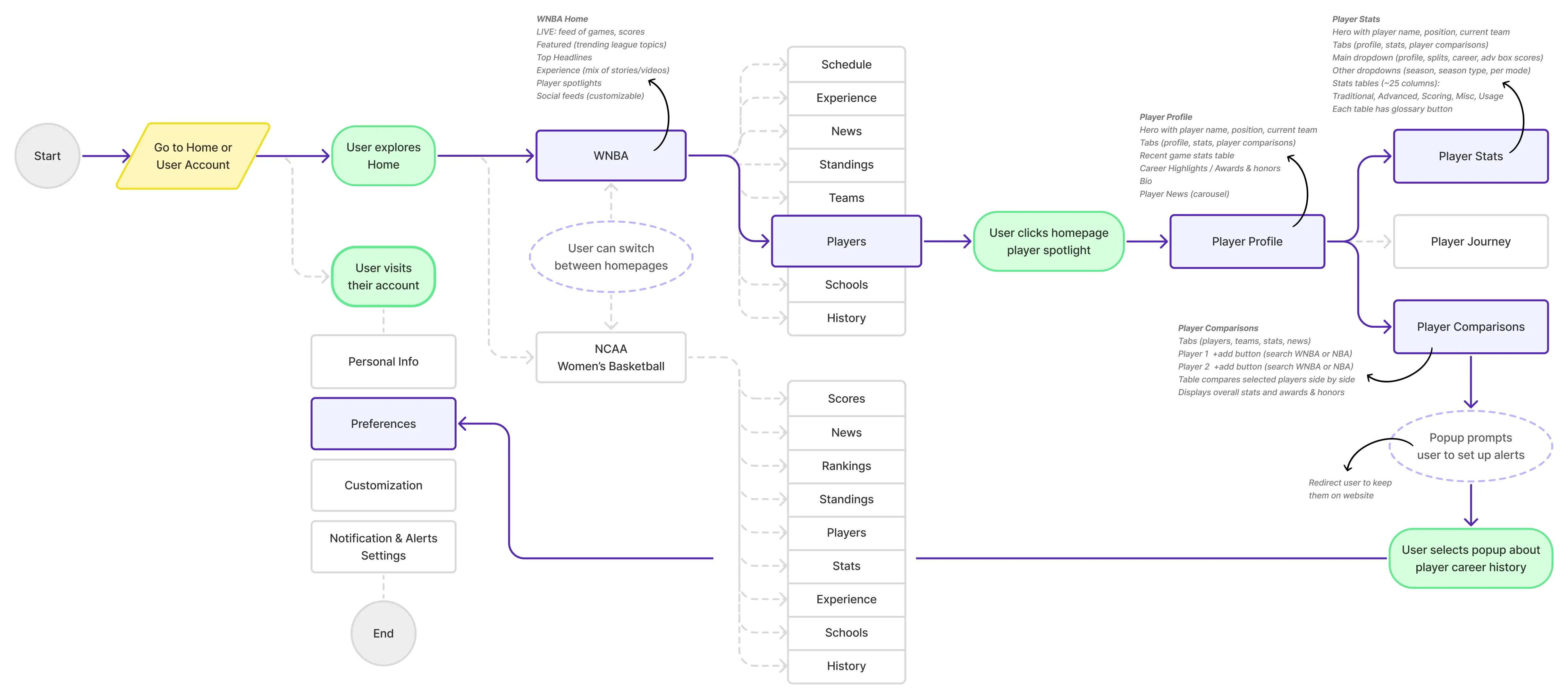
I mapped the end-to-end user flow to ensure the information architecture supported the core use cases before moving into interface design.
Wireframes
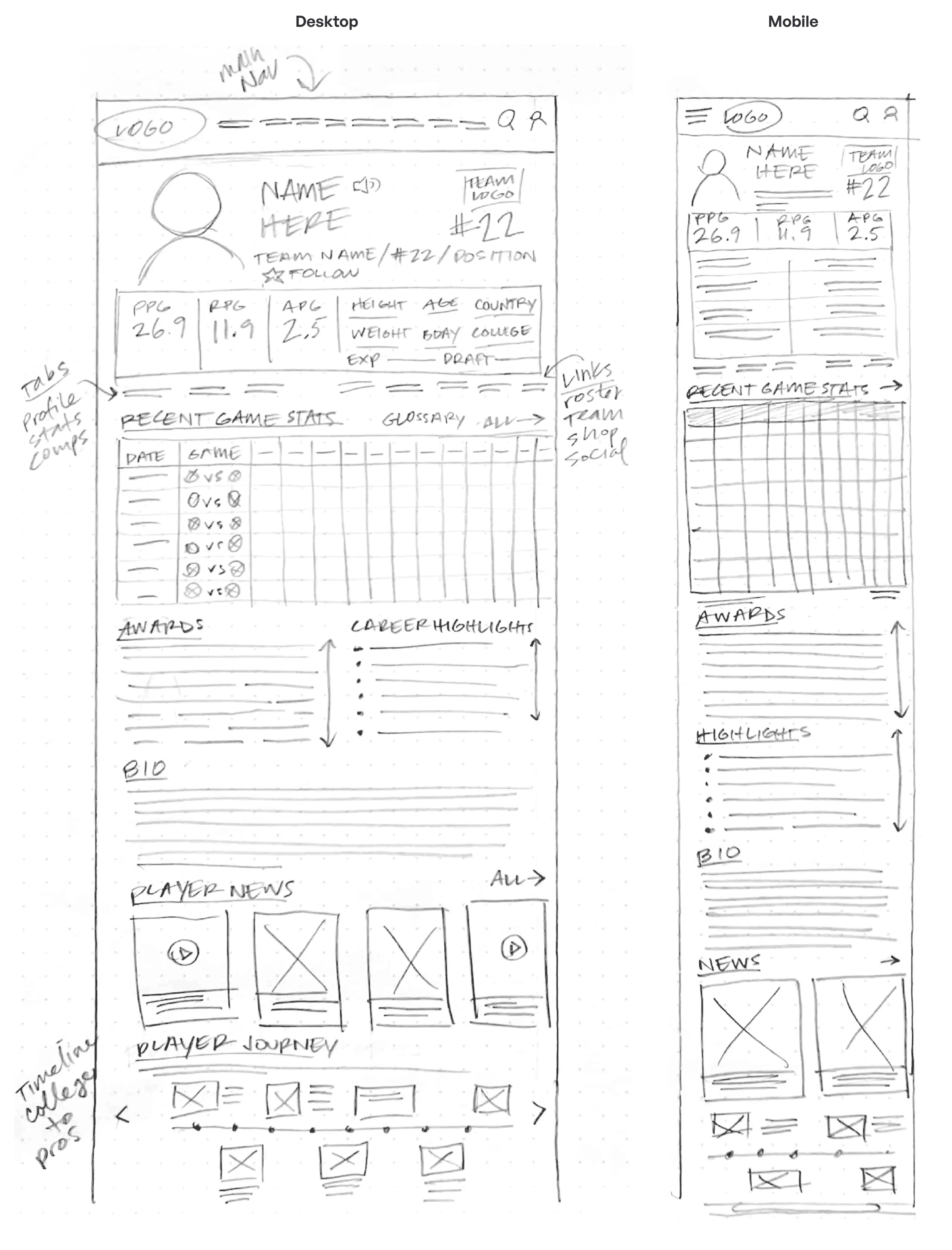
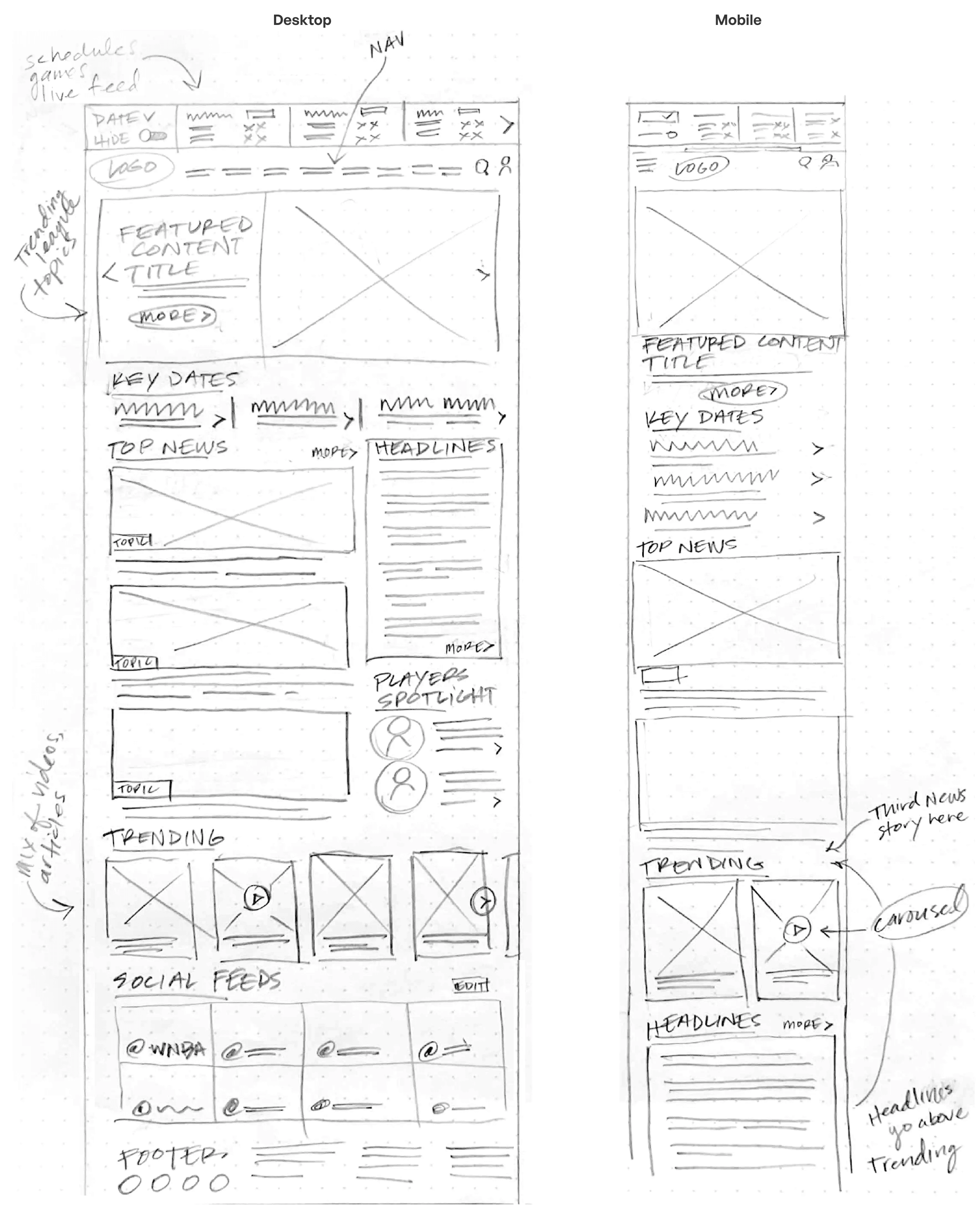
Wireframes focused on validating content hierarchy, navigation, and responsiveness across the product's highest-value experiences before investing in visual design.
Test & Iterate
Refining the experience through usability testing.
Testing was used to evaluate clarity, navigation and feature usefulness across key flows.These design refinements improved discoverability, readability and ease of use.
Home Page
Before
Users struggled to understand the hierarchy of content on the homepage. They found it difficult to quickly identify featured stories and recent updates.
After
Introducing a “What’s Trending” shorts section, helps users quickly discover relevant and timely content.
Player Profile
Before
Users were unsure how player information was organized and had difficulty understanding the player’s journey across seasons.
After
Removing the Player Journey opened space for a clearer layout and improve scanning for stats tables and career highlights.
Player Comparisons
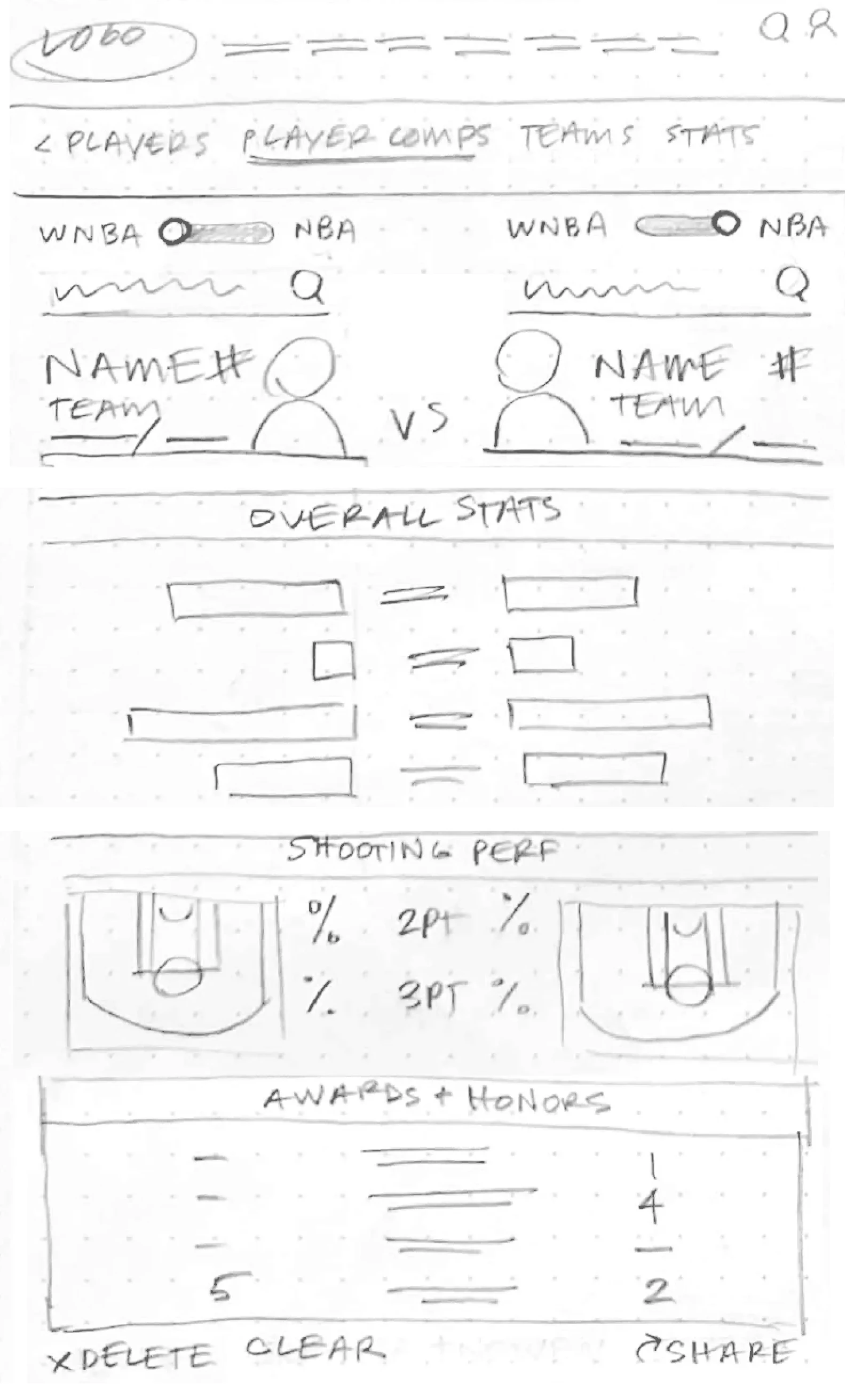
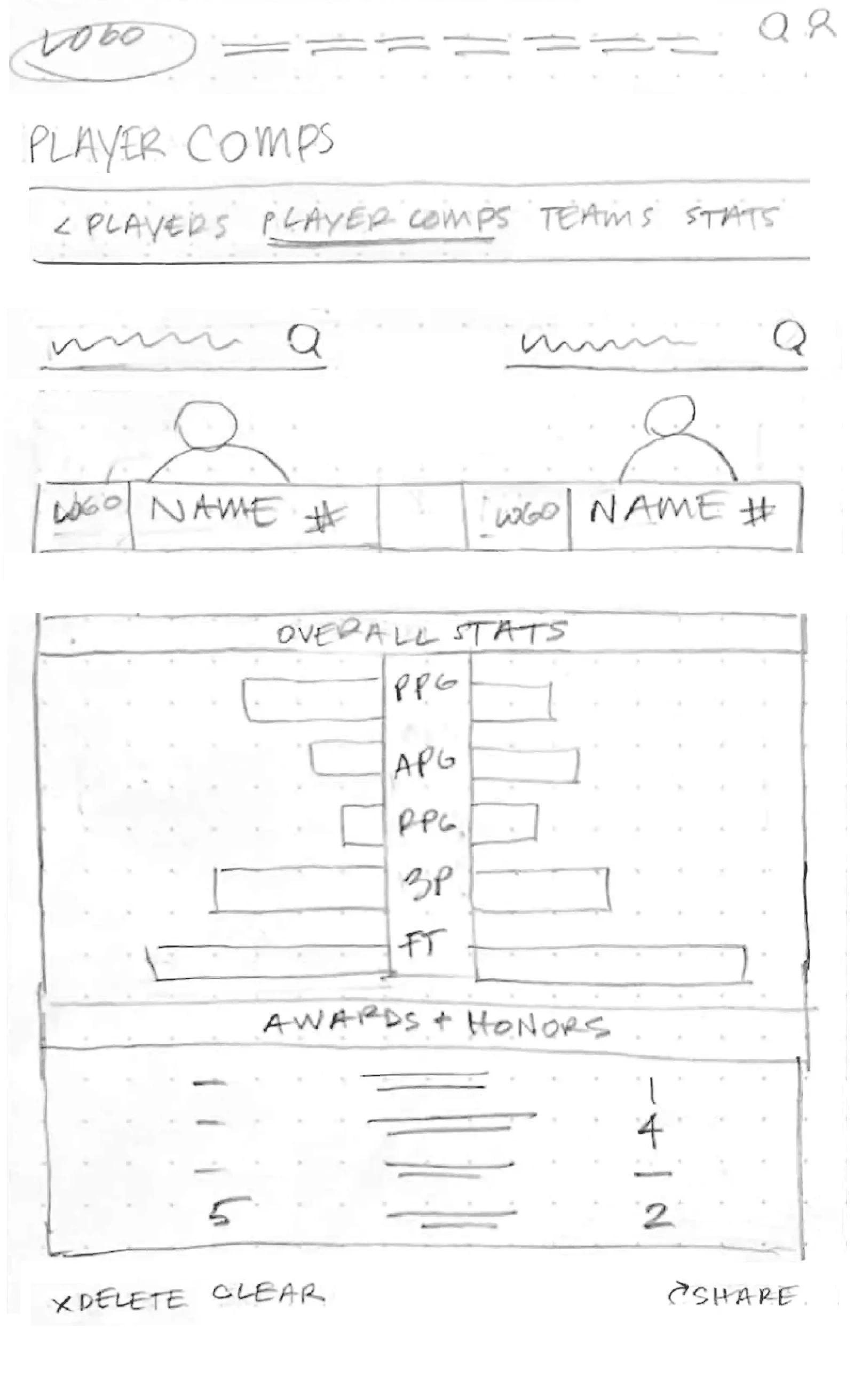
Two layout variations were tested to evaluate clarity, scanability, and usefulness when comparing players.
Result
80% of participants preferred Option B due to its clearer hierarchy and reduced visual clutter.
Insight
Users valued a streamlined layout. Removing the toggle and heavy stats made it faster and more intuitive.
Design outcome
Visual Design & Branding
Elevating women’s basketball through identity and expression.
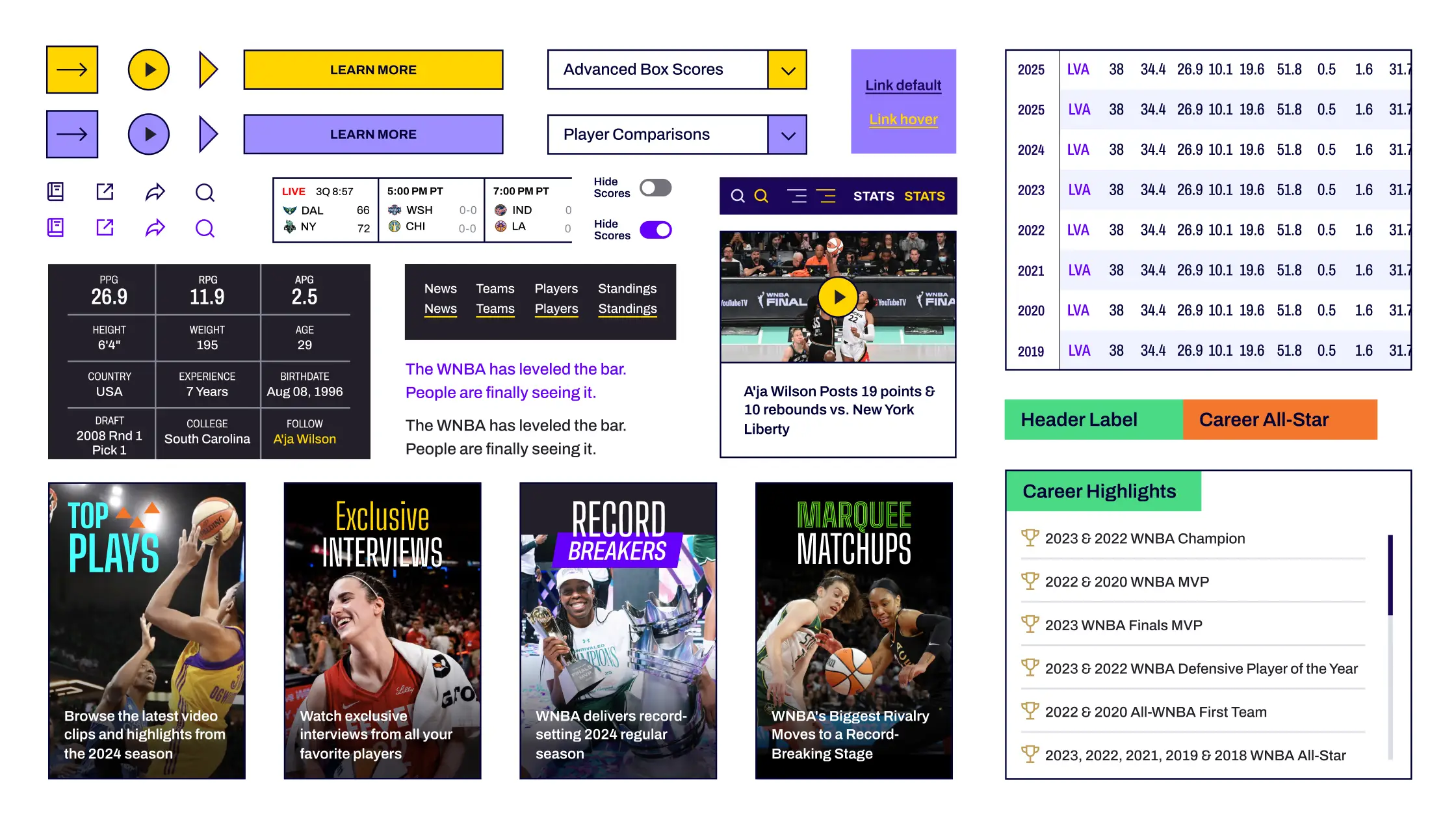
The Queens Court logo and name embodies empowerment and visibility of women’s basketball. It draws inspiration from the authority of royalty paired with the energy of the game. A bold purple and gold palette, crown brandmark and dynamic imagery convey pride and and momentum.
Logo Design

Branding
Delivery
Bringing the product to life.
The final prototype brings together the product strategy, information architecture, and design system into a cohesive experience for women's basketball fans across desktop and mobile.
Project takeaways
Building an MVP
Research surfaced many opportunities. Prioritizing the MVP reinforced that solving a few meaningful problems well creates a stronger product than building everything at once.
Product Strategy
Aligning user needs with business goals early created a clearer framework for evaluating features and making product decisions throughout the project.
Designing for Engagement
Player profiles, comparisons, and editorial content transformed statistics into richer storytelling, creating more for fans to explore the sport beyond game results.
Design Systems
Developing the brand identity and reusable UI components together helped create a consistent experience that could scale as new features were introduced.
Validation
I conducted moderated usability testing with three women's basketball fans to evaluate navigation, content discovery, player statistics, and the player comparison experience.
Participants successfully completed all four tasks, validating the information architecture and confirming that navigation, content hierarchy, and key interactions were intuitive. Participants especially valued the player comparison feature, comprehensive player statistics, and the ability to follow their favorite athletes.
“Easy to browse and navigate! Loved the player stats and the ability to compare different players. Great website!!”
Future Direction
The initial usability test validated the core experience. Future testing with a broader participant group would help refine personalization, better understand long-term engagement, and prioritize enhancements beyond the MVP.
 View CV