Travelbox

Relocating for short-term work is common, settling into a rental smoothly isn’t.

Subscription app concept for professionals who temporarily relocate for short term work.

Professionals who temporarily relocate for work often receive housing support, but still face unexpected costs, unclear rental amenities, and the hassle of figuring out what to pack or buy after arrival. Travelbox is an app concept designed to make short-term stays feel easier through curated and customizable subscription boxes with everyday essentials, helping users settle in quickly and comfortably.

Role

UX/Product Designer

Project Type

Solo concept project

Responsibilities

User research, information architecture, interaction design, branding, visual design, prototyping, usability testing

Platform

iOS app concept

Tools

Figma, FigJam, Ballpark, Optimal Workshop, Adobe Illustrator, Google Meet

Timeline

4 weeks

Research Insights

Temporary housing solves the stay, not the setup.

Research Insights

Temporary housing solves the stay, not the setup.

For professionals who temporarily relocate for work, research revealed a consistent gap in the short-term relocation experience: while housing stipends often cover the rental itself, everyday essentials, shipping costs for personal items and purchases for missing property amenities create stress, unexpected expenses and uncertainty upon arrival.

Participants described needing confidence in what to pack, what the rental would actually include and how to settle in comfortably without overspending.

What will the rental actually include?

Users often lack clear information about what amenities and essentials a rental actually includes.

What should I pack, ship or buy later?

Uncertainty about what to pack or ship adds stress before the move even begins.

What extra costs will come up?

Missing household basics create inconvenience, extra errands and unexpected expenses.

How quickly will it feel comfortable?

Settling into a temporary home feels slower and harder without comfort and predictability.

Opportunity

Reduce uncertainty around rental amenities, unexpected costs and move-in stress. Help users settle into temporary housing with greater control and peace of mind.

What will the rental actually include?

Users often lack clear information about what amenities and essentials a rental actually includes.

What should I pack, ship or buy later?

Uncertainty about what to pack or ship adds stress before the move even begins.

What extra costs will come up?

Missing household basics create inconvenience, extra errands and unexpected expenses.

How quickly will it feel comfortable?

Settling into a temporary home feels slower and harder without comfort and predictability.

Opportunity

Reduce uncertainty around rental amenities, unexpected costs and move-in stress. Help users settle into temporary housing with greater control and peace of mind.

What participants experienced

I interviewed six participants with temporary relocation experience to better understand how professionals prepare for short-term stays and what makes settling in more difficult. Across interviews, participants described incomplete rental information, budget strain and the lingering stress of getting comfortable in an unfamiliar space.

“It’s frustrating when rental apps don’t show all amenities. I need more details so I can prepare for relocation.”

Amenity Seeker

Female, 43

“It’s hard to stay cost-conscious when shipping fees and missing essentials eat into a monthly housing allowance.”

Budget Balancer

Male, 57

“Moving into a rental and realizing it lacks basic essentials is misleading and inconvenient.”

Caught Off Guard

Female, 32

“Settling into a new rental comfortably is always in the back of my mind.”

Comfort Seeker

Female, 51

“It’s frustrating when rental apps don’t show all amenities. I need more details so I can prepare for relocation.”

Amenity Seeker

Female, 43

“It’s hard to stay cost-conscious when shipping fees and missing essentials eat into a monthly housing allowance.”

Budget Balancer

Male, 57

“Moving into a rental and realizing it lacks basic essentials is misleading and inconvenient.”

Caught Off Guard

Female, 32

“Settling into a new rental comfortably is always in the back of my mind.”

Comfort Seeker

Female, 51

Key research themes

These patterns revealed three recurring themes around rental uncertainty, budget strain and the challenge of settling in comfortably.

Rental Unknowns

Unclear amenity details make it difficult for users to plan ahead and know what to pack, ship or purchase later.

Budget Strain

Unexpected expenses from missing essentials and shipping needs make temporary relocation harder to manage affordably.

Settling-in Stress

A lack of comfort, predictability and everyday basics slows the transition into temporary housing.

Concept Development

Framing the relocation journey.

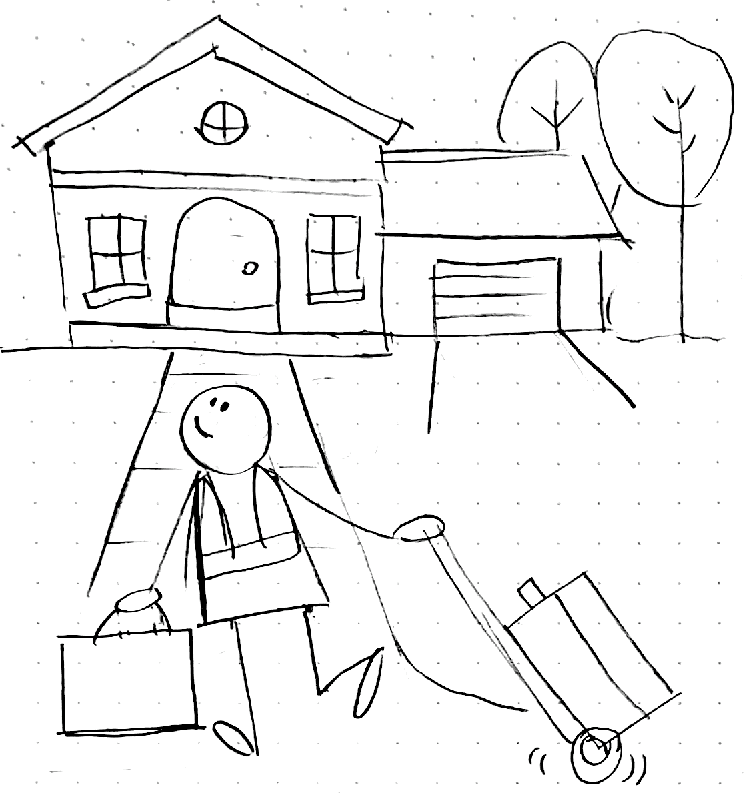
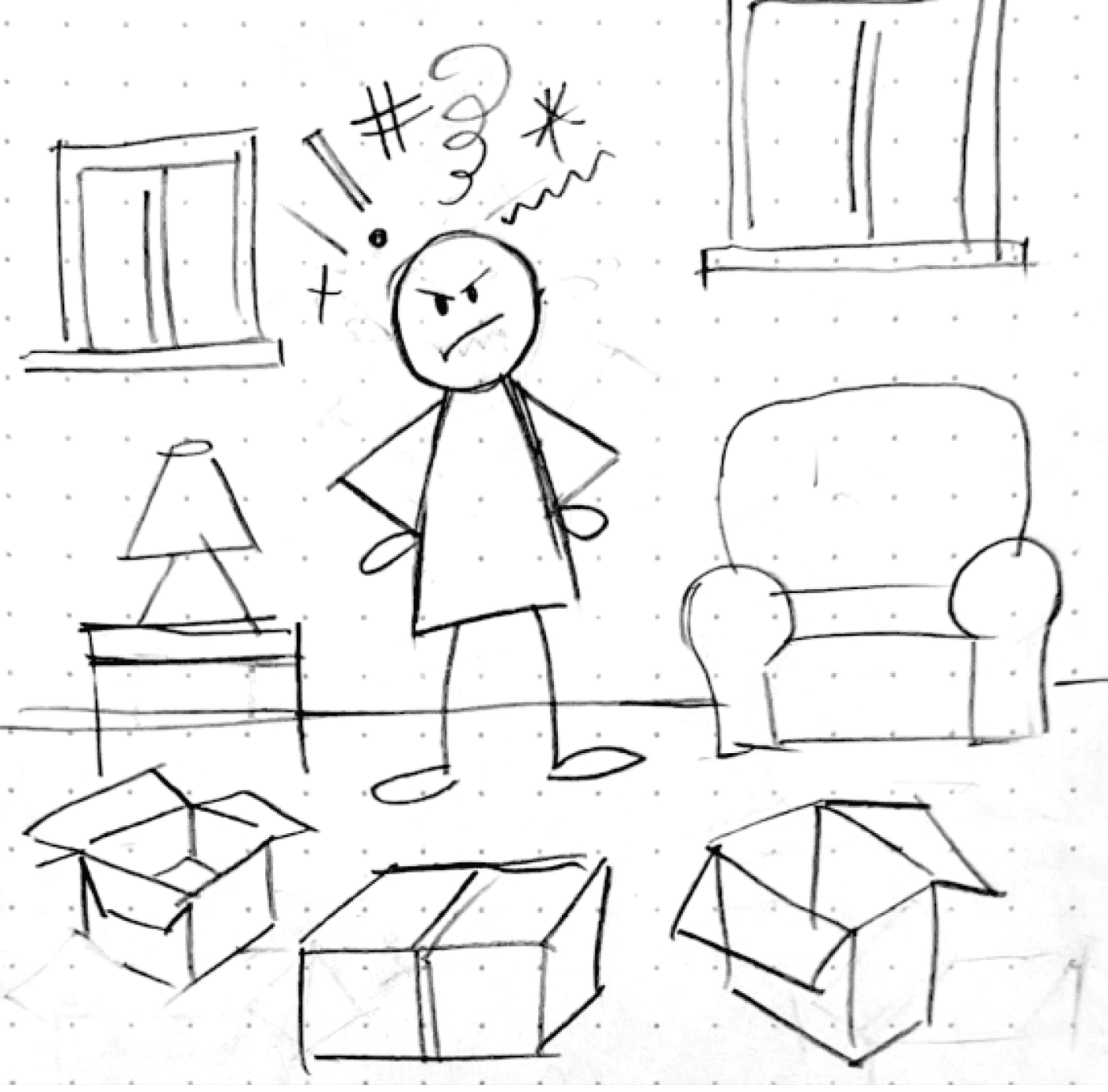
This storyboard helped translate research into a real-world scenario, showing how missing essentials and limited preparation can make settling into a temporary rental more stressful.
The User

The user arrives at their short-term rental in a new city and starts work the next day.
The Problem

They begin unpacking and realize the rental is missing basic amenities and everyday essentials.
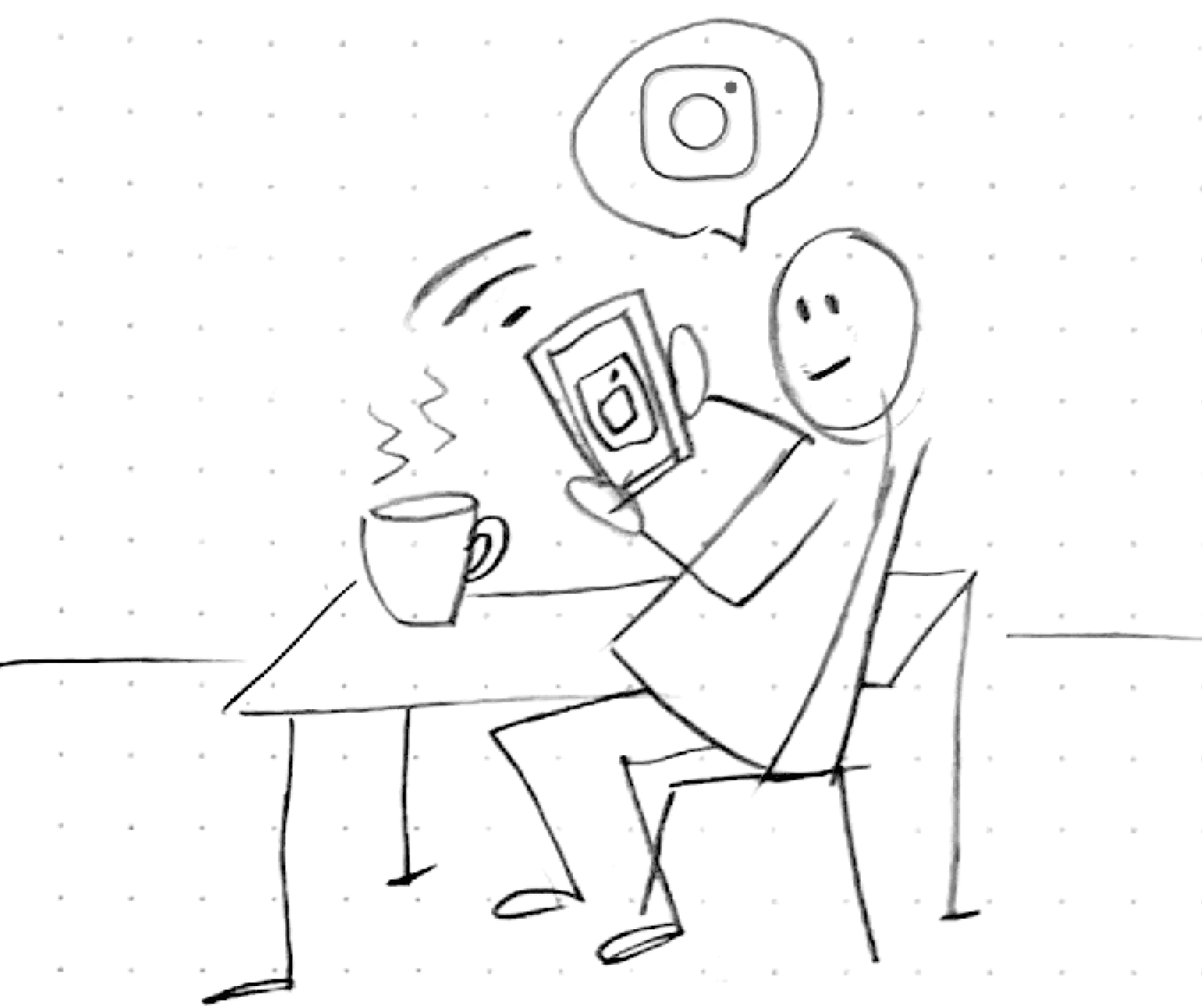
Solution Intro

They take a break, scroll social media and see an ad for a box designed for short-term renters.
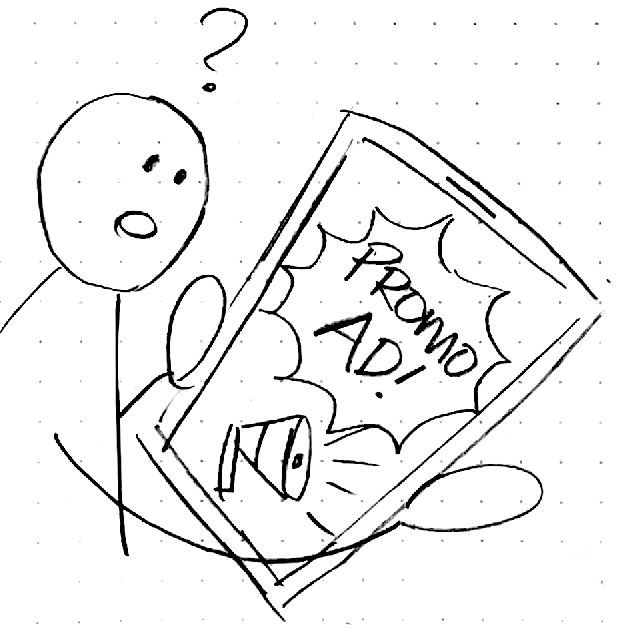
Discovery

They tap to learn more because they do not have time to shop for everything before work starts.
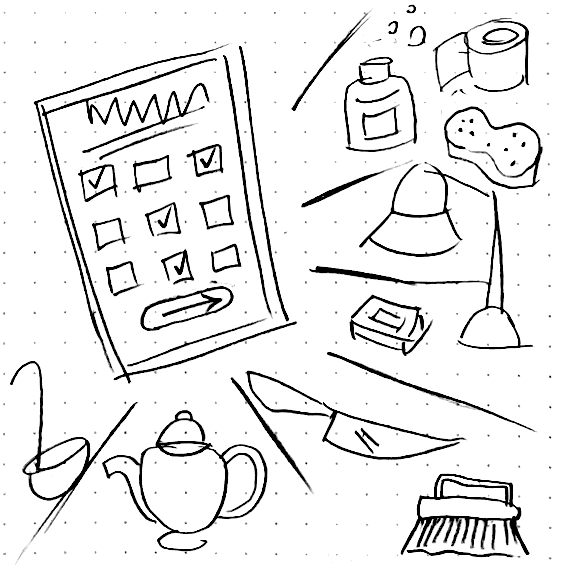
Decision

They realize it’s a convenient, affordable way to get essentials delivered monthly and sign up.
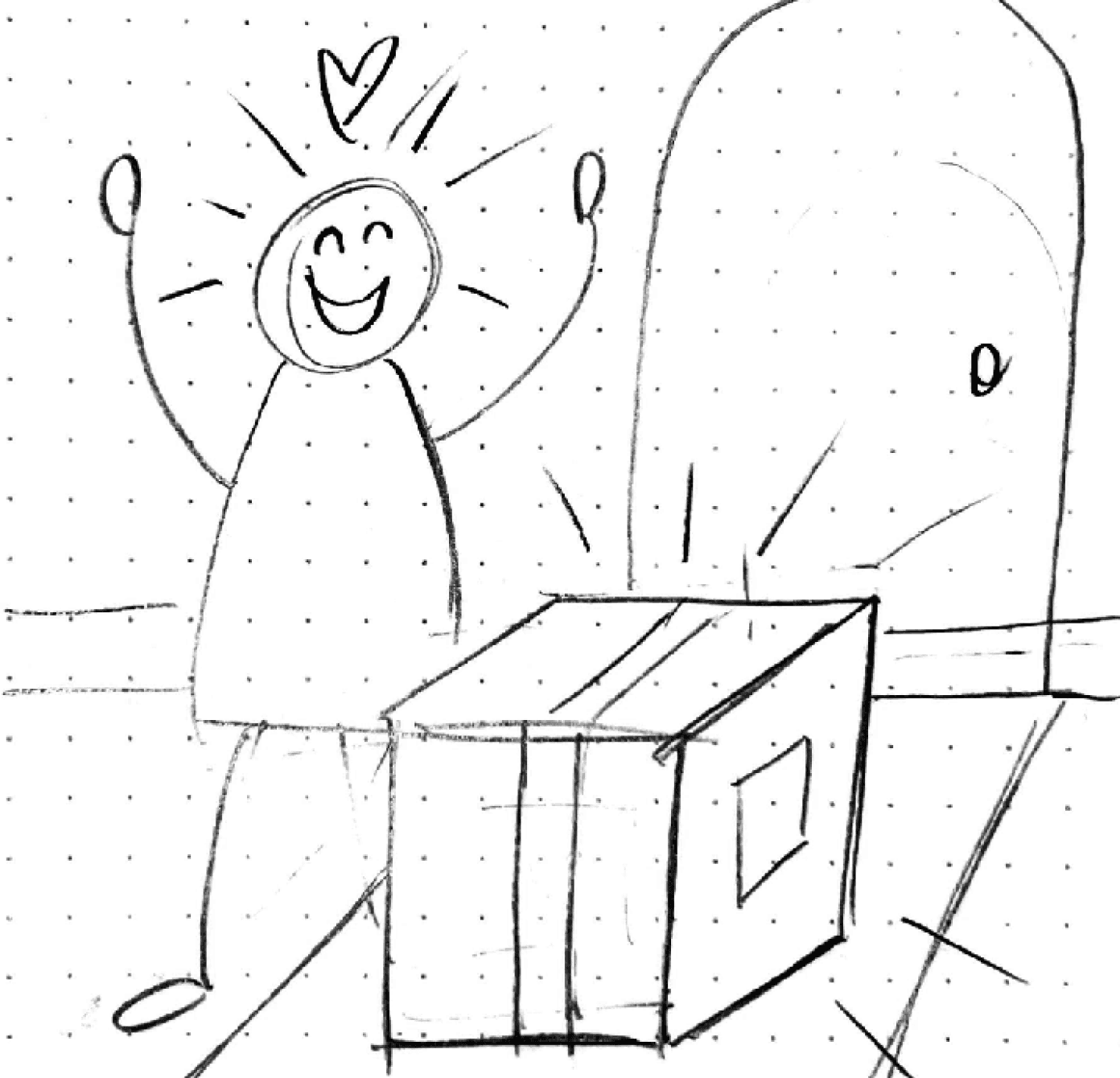
Happy Outcome

A few days later, the shipment arrives with the items needed to settle in more comfortably.

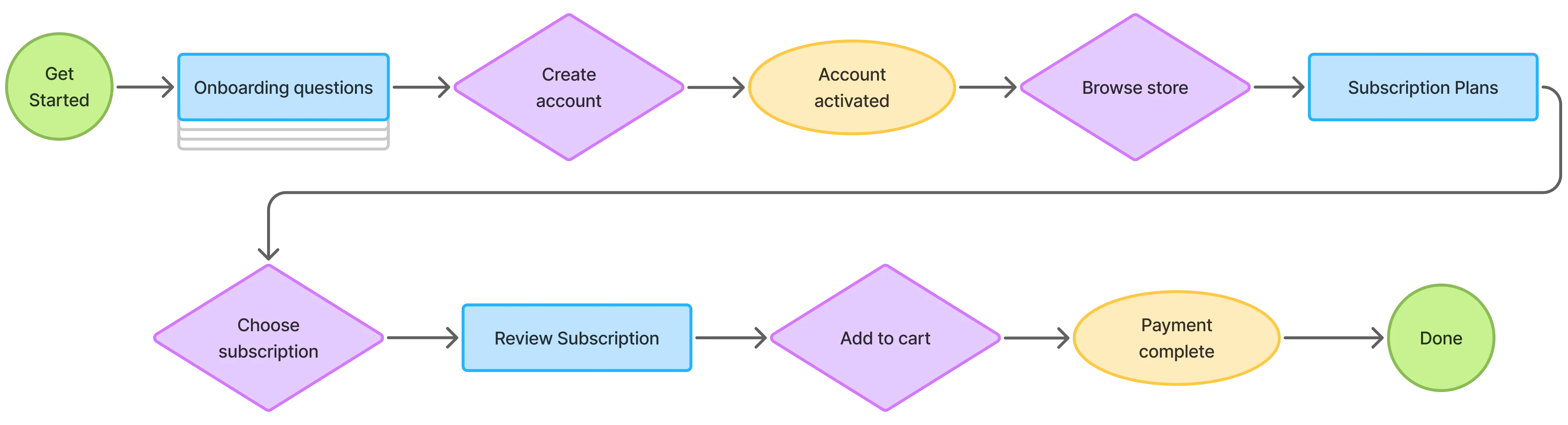
Solution Overview

Mapping the end-to-end product flow.

Relocation stress starts before move-in, so I designed Travelbox as more than a storefront. To reduce uncertainty and support better decision-making before arrival, I mapped the full product flow. This connected onboarding, browsing and subscription selection into one experience.
Design Exploration

Exploring key directions for the product.

Design Exploration

Exploring key directions for the product.

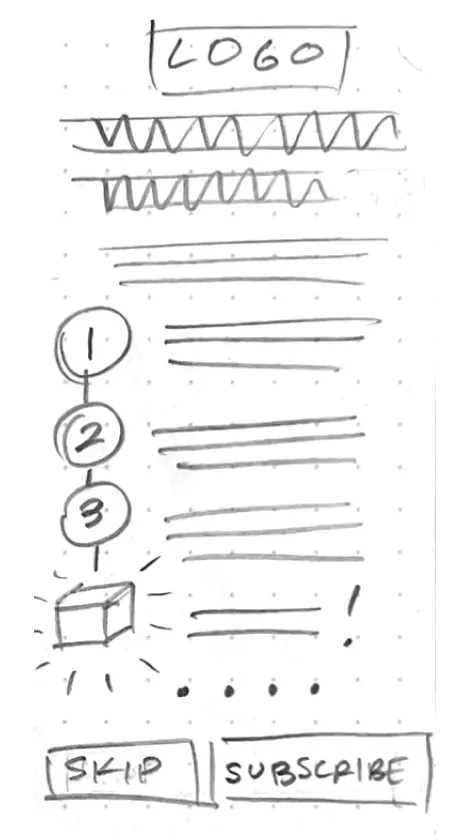
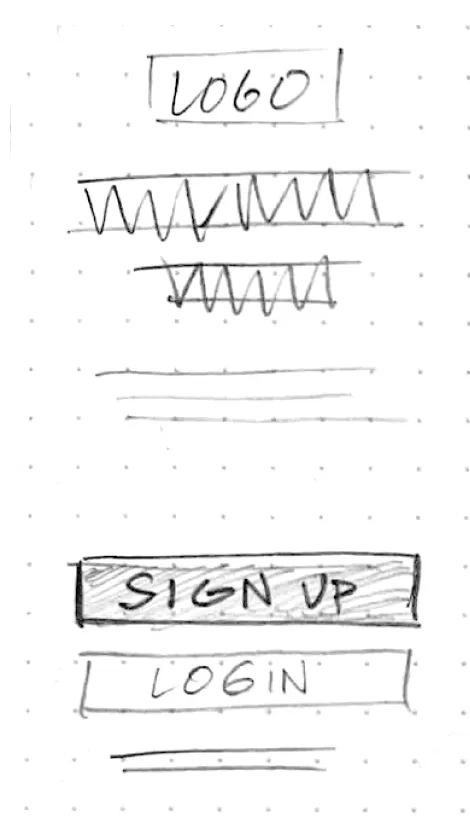
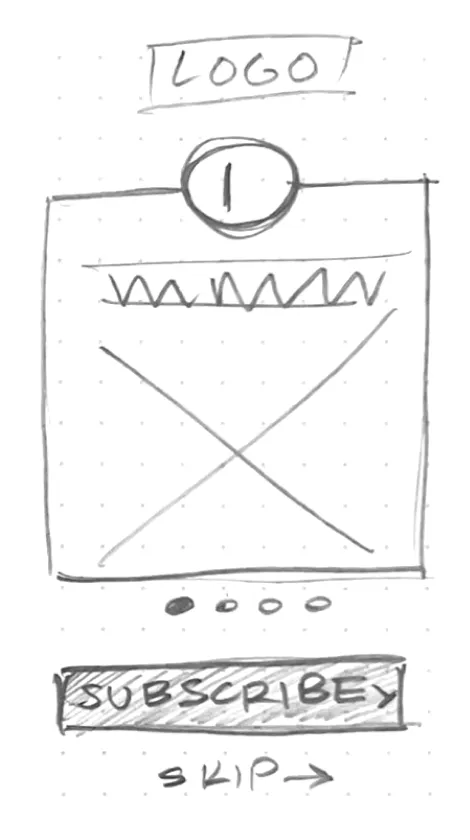
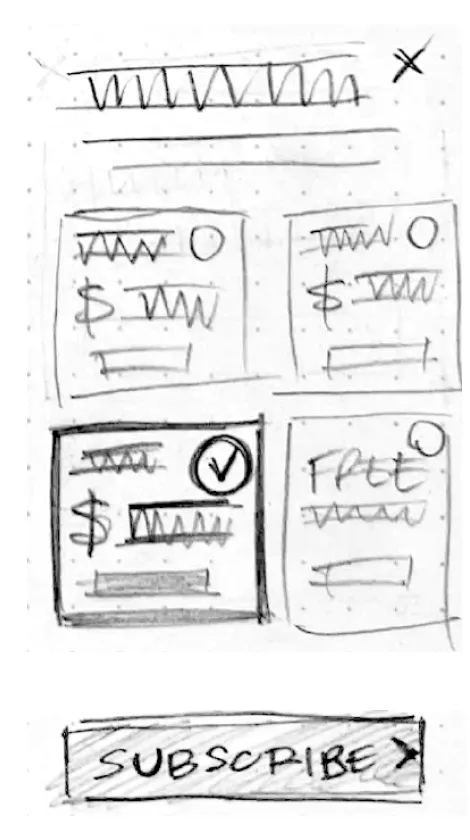
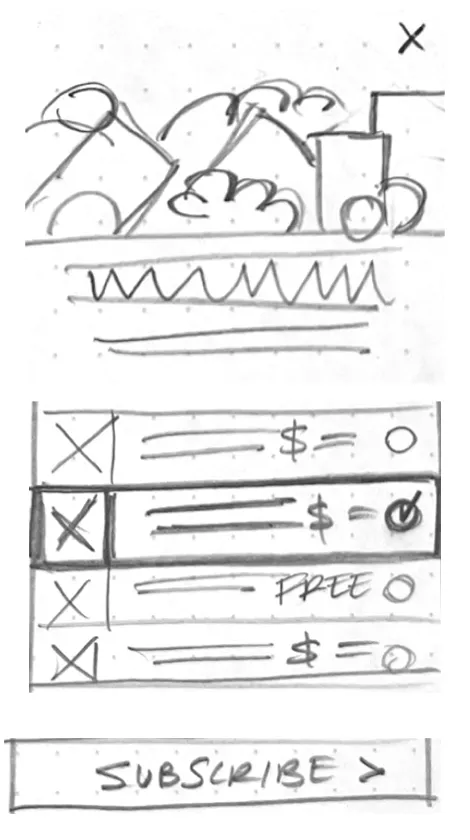
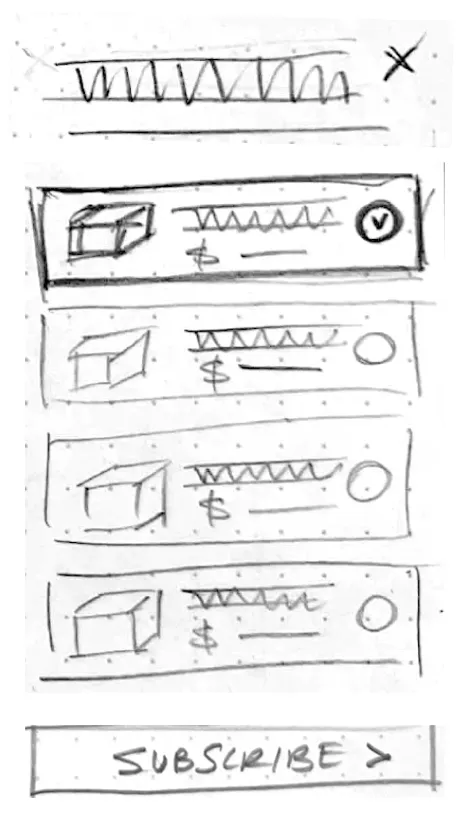
I explored low-fidelity approaches for key moments in the experience, including the start screen and subscription plan selection.

I explored low-fidelity approaches for key moments in the experience, including the home/start screen and subscription plan selection.

Home / Start screen

Option 1

Before sign-up, a quick intro about how it works on the landing screen.

Option 2

A simple landing screen with a welcome message and clear sign-up options.

Option 3

An intro that explains how the service works through a swipe-based sequence.

Why Option 2 worked best

Why Option 2 worked best

It has a simpler entry point and prioritizes sign-up over explaining the service upfront. This guides users into onboarding for a personalized experience.

Before sign-up, a quick intro about how it works on the landing screen.

Option 1
Option 2

A simple landing screen with a welcome message and clear sign-up options.

Option 3

An intro that explains how the service works through a swipe-based sequence.

Subscription Plan screen

Option 1

A simple grid layout making the subscriptions a primary focus.

Option 2

Plans are paired with marketing content to introduce each subscription.

Option 3

For easier scanning and selection, a list-based layout for the subscriptions.

A simple grid layout making the subscriptions a primary focus.

Option 1
Option 3

For easier scanning and selection, a list-based layout for the subscriptions.

Option 2

Plans are paired with marketing content to introduce each subscription.

Why Option 3 worked best

Why Option 3 worked best

A single-column layout made plan selection feel simpler and less compact. Creating a clear hierarchy around pricing and details, helps users compare plans without feeling overwhelmed.

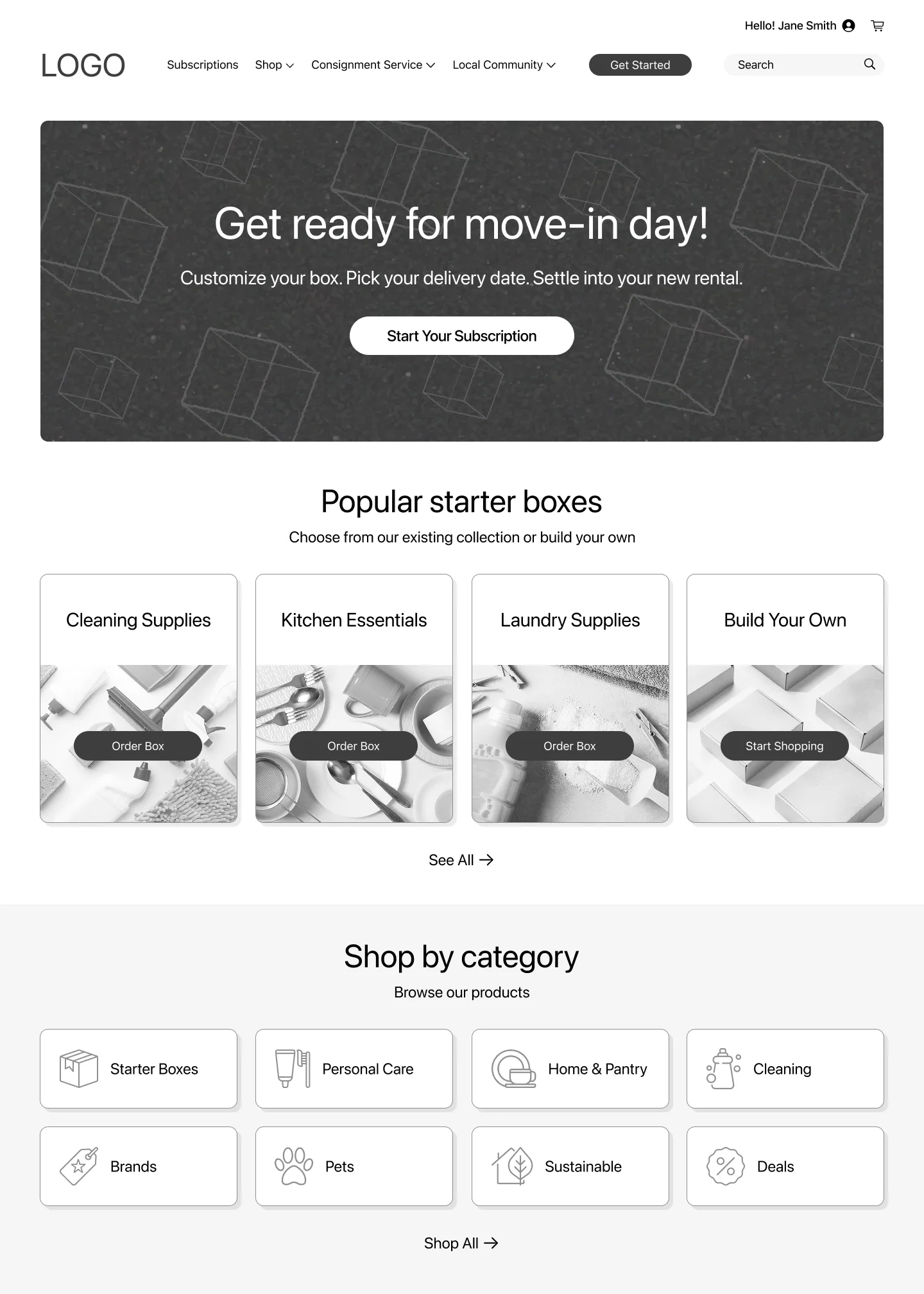
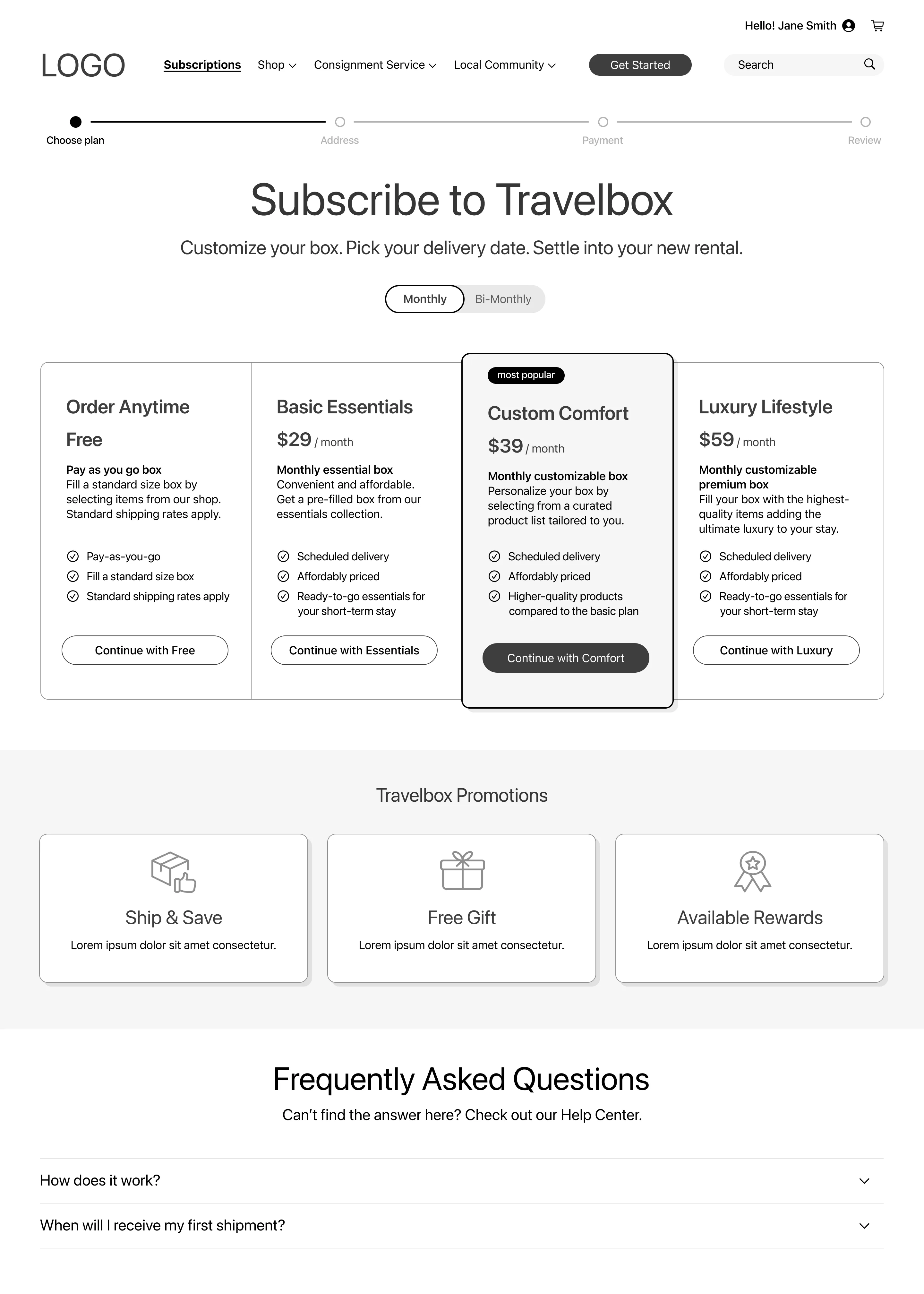
Extending the concept to web

Although Travelbox was designed as a mobile-first app, I also explored how key flows could translate to web through mid-fidelity page concepts and supporting information architecture. This helped define how users might browse plans, explore products and access the service across devices.

Store Landing

Explored how browsing and starter box discovery could extend to web.
Subscription Plans

Translated mobile plan selection into a broader desktop comparison flow.
High-Fidelity Features

Bringing the Travelbox concept to life.

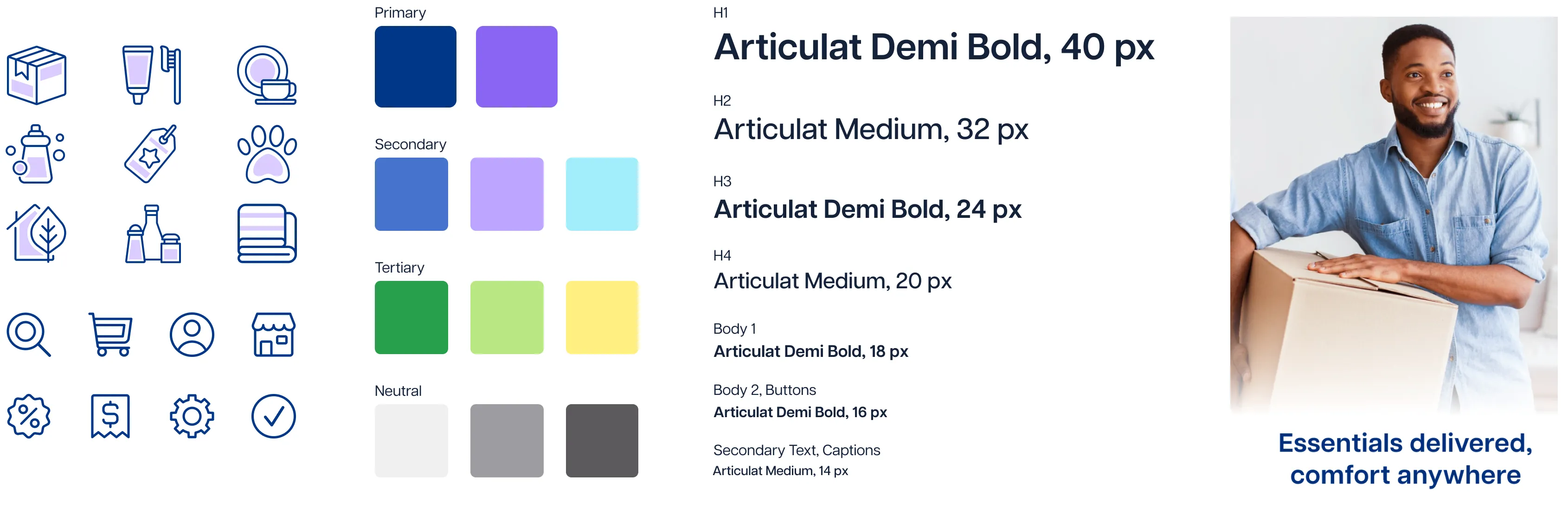
Branding the experience

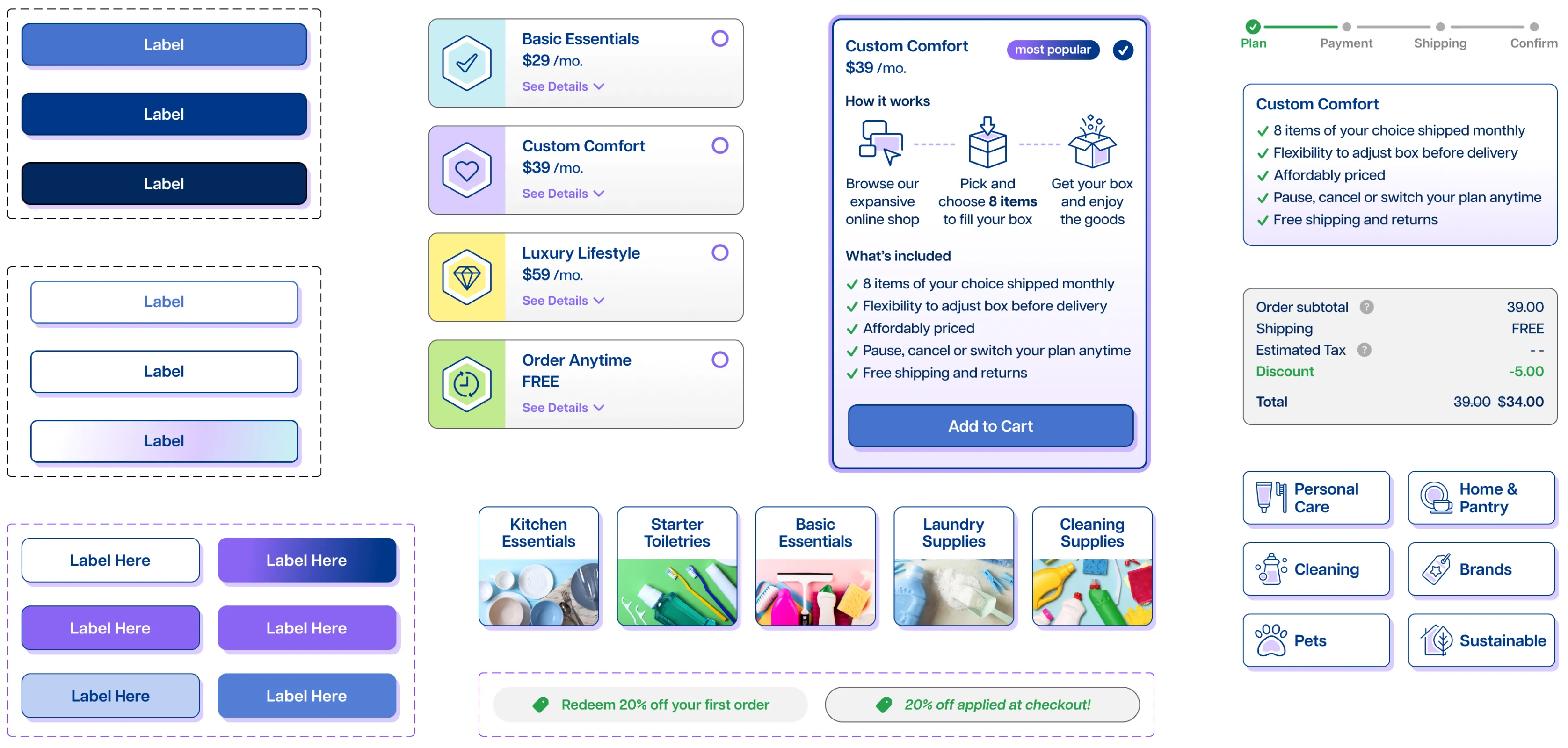
Travelbox was designed to feel approachable, practical and comforting during a stressful transition. Soft gradients, rounded components and simple iconography helped create a visual system that feels functional and calm.

Logo Design

Visual Style

Component Library

Logo Design

Visual Style

Component Library

High-fidelity mock-ups

Account Sign-Up

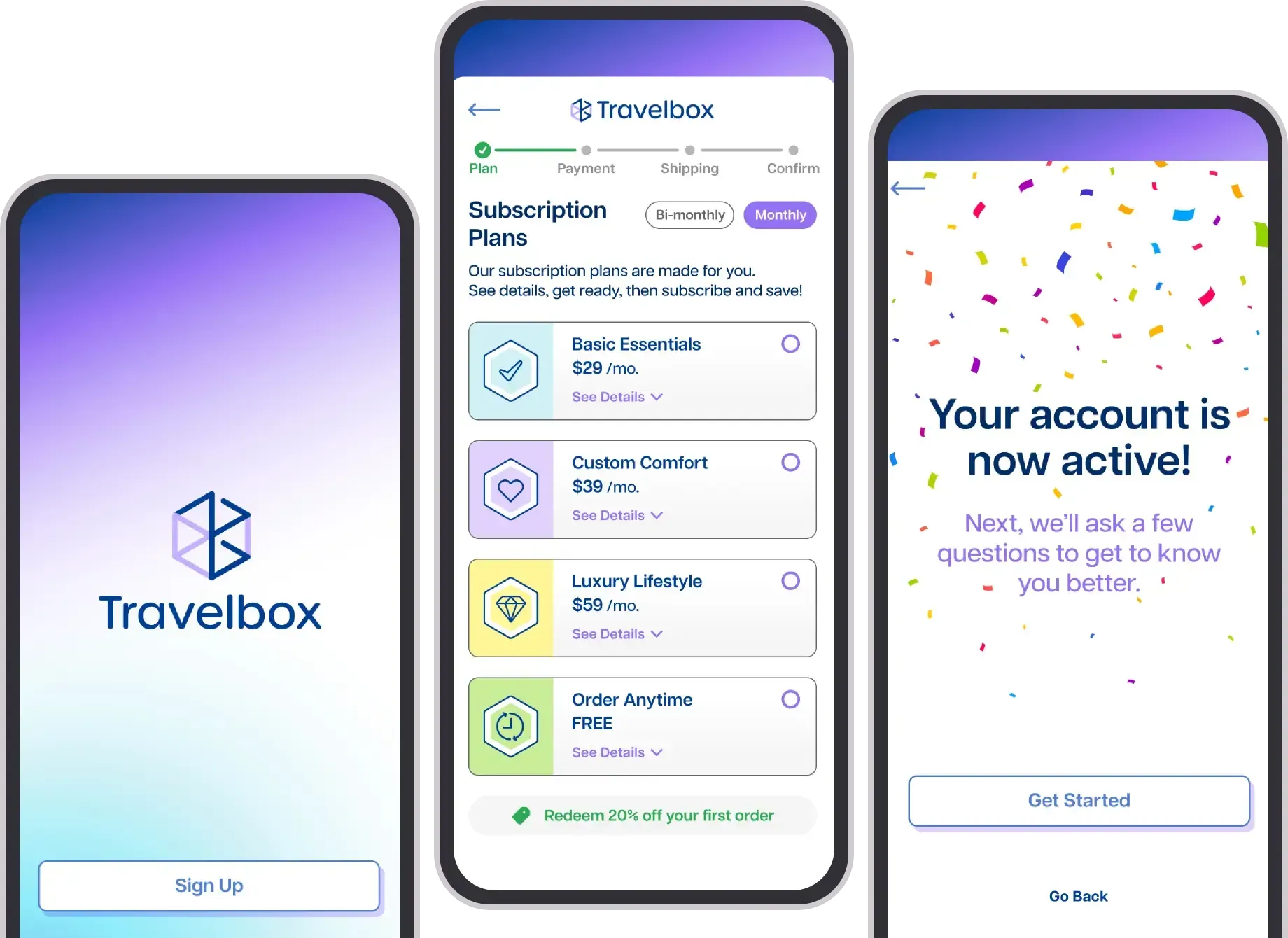
The sign-up flow was designed to feel simple and familiar, giving users a clear way to create an account before moving into a more personalized setup. Friendly imagery, flexible entry points and a straightforward verification step helped reduce friction early on.

Onboarding Quiz

The onboarding quiz captures key details about a user’s rental, priorities and subscription preferences to guide more relevant plan recommendations. Breaking questions into a short, focused flow helped make the experience feel manageable and personalized.

Subscription Flow

The subscription flow was designed to make plan selection feel clear and structured. Pricing, included benefits and customization options were surfaced in a way that helped users review their choices and move forward confidently.

Account Sign-Up

The sign-up flow was designed to feel simple and familiar, giving users a clear way to create an account before moving into a more personalized setup. Friendly imagery, flexible entry points and a straightforward verification step helped reduce friction early on.

Onboarding Quiz

The onboarding quiz captures key details about a user’s rental, priorities and subscription preferences to guide more relevant plan recommendations. Breaking questions into a short, focused flow helped make the experience feel manageable and personalized.

Subscription Flow

The subscription flow was designed to make plan selection feel clear and structured. Pricing, included benefits and customization options were surfaced in a way that helped users review their choices and move forward confidently.

Test & Iterate

Refining the product through user feedback

Testing revealed where the product needed more clarity, stronger hierarchy and better guidance. I used feedback to refine key moments in the flow, making the interface easier to scan, more informative and more supportive as users moved from browsing to subscription selection.

Store Landing

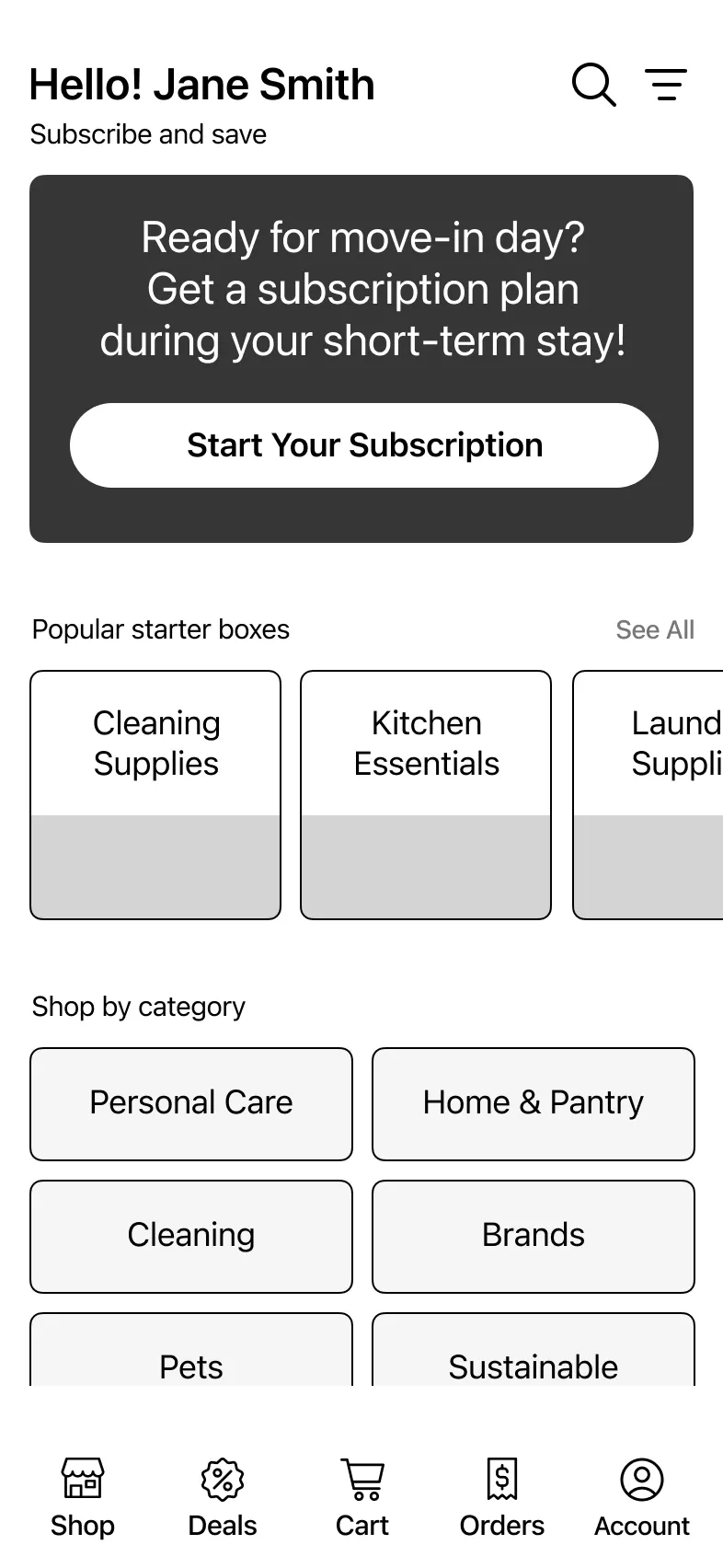
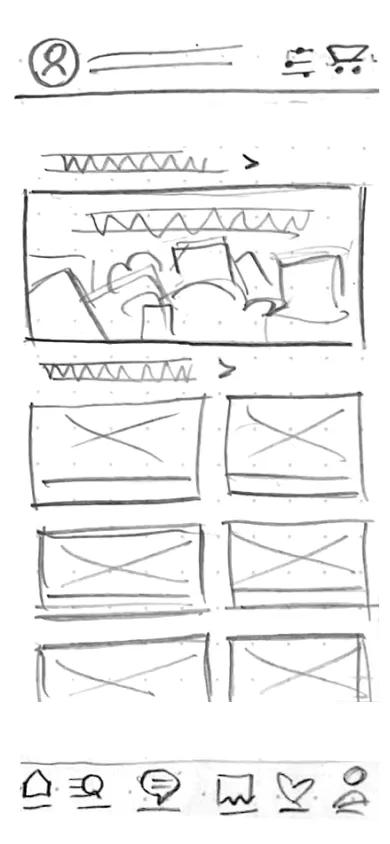
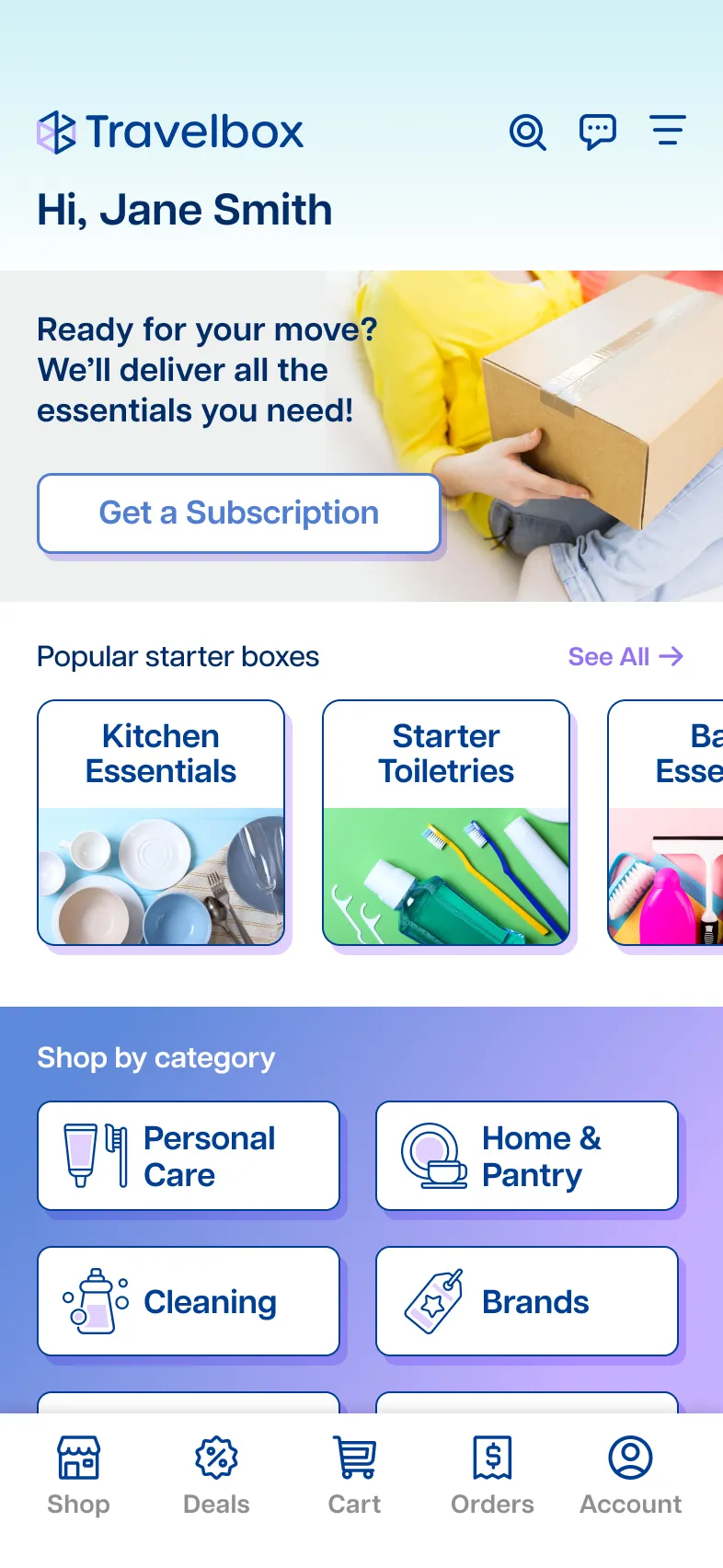
What changed

The store landing screen evolved from a basic structural layout into a more guided entry point, with stronger hierarchy and clearer visual separation across featured content and categories.

Wireframe
Mid-fidelity

High-fidelity
Why it changed

Stronger imagery, clearer hierarchy and more visual separation helped users scan the page more easily, understand the service faster and identify where to start.

Subscription Selection

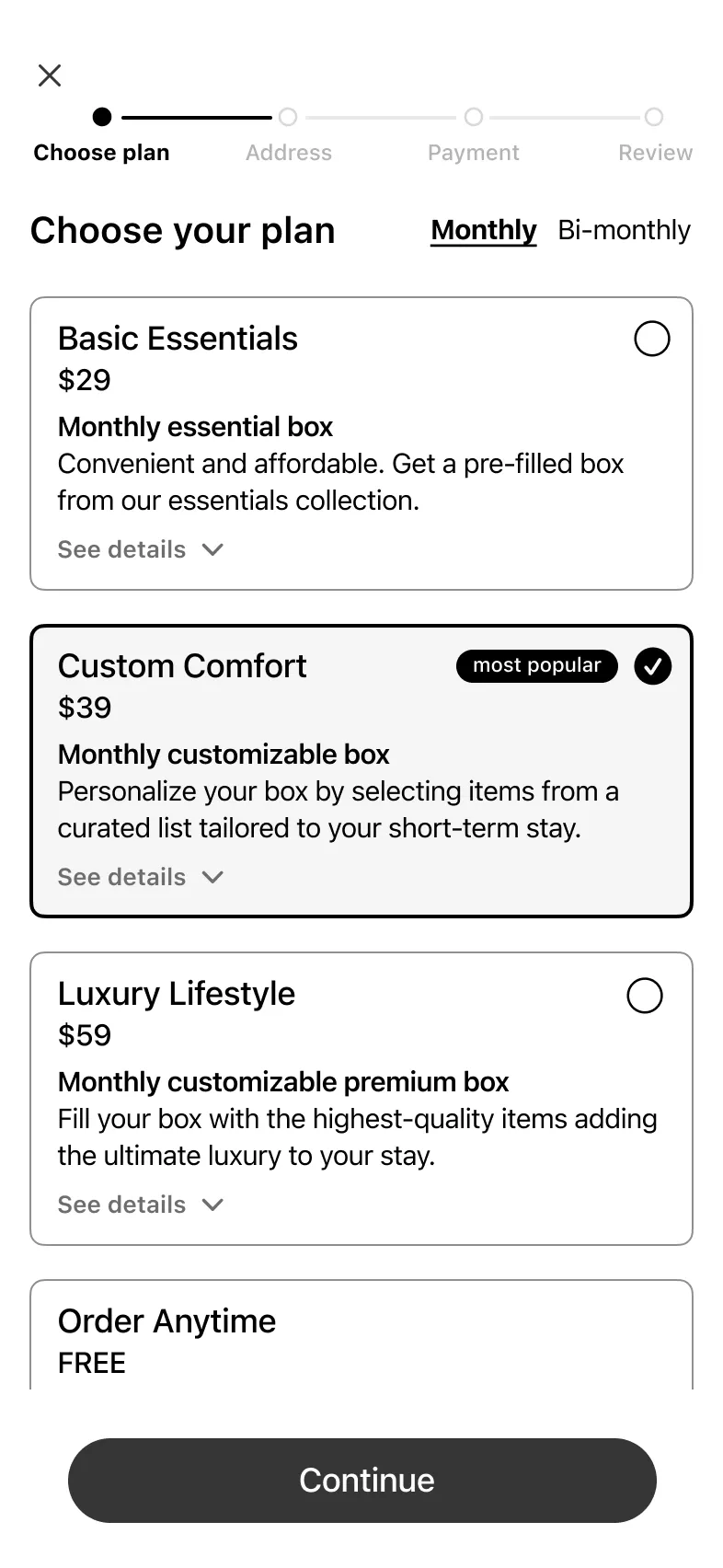
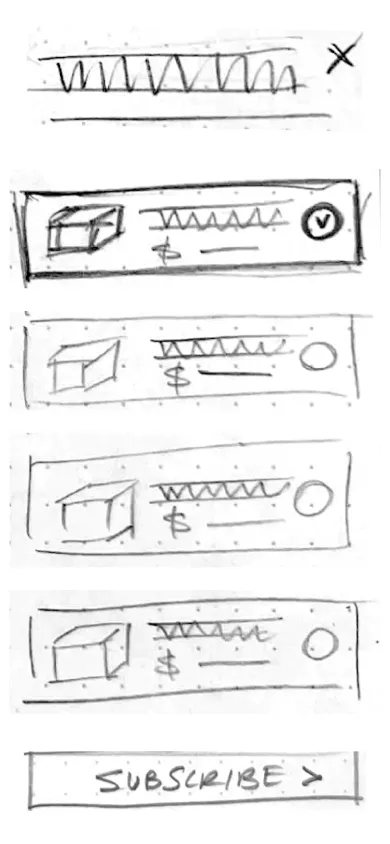
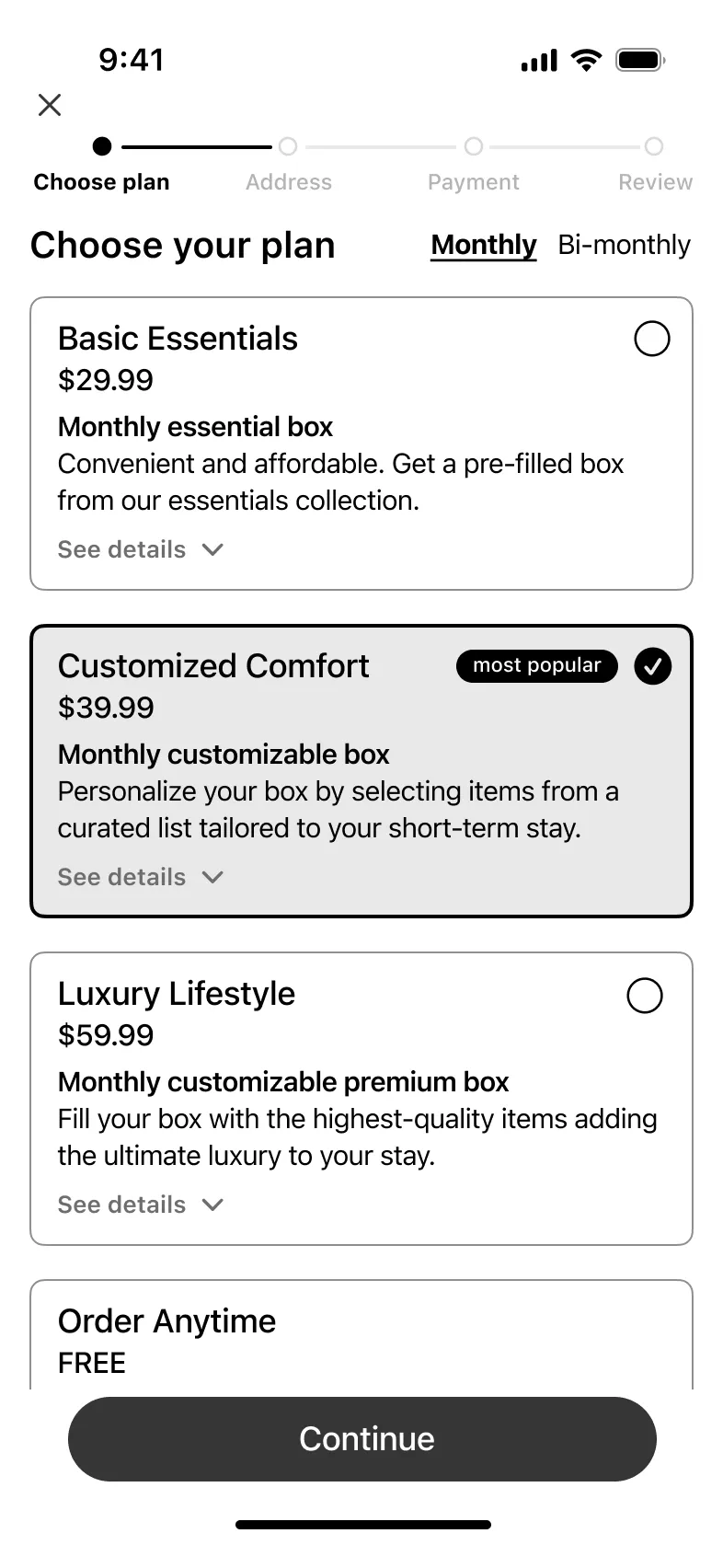
What changed

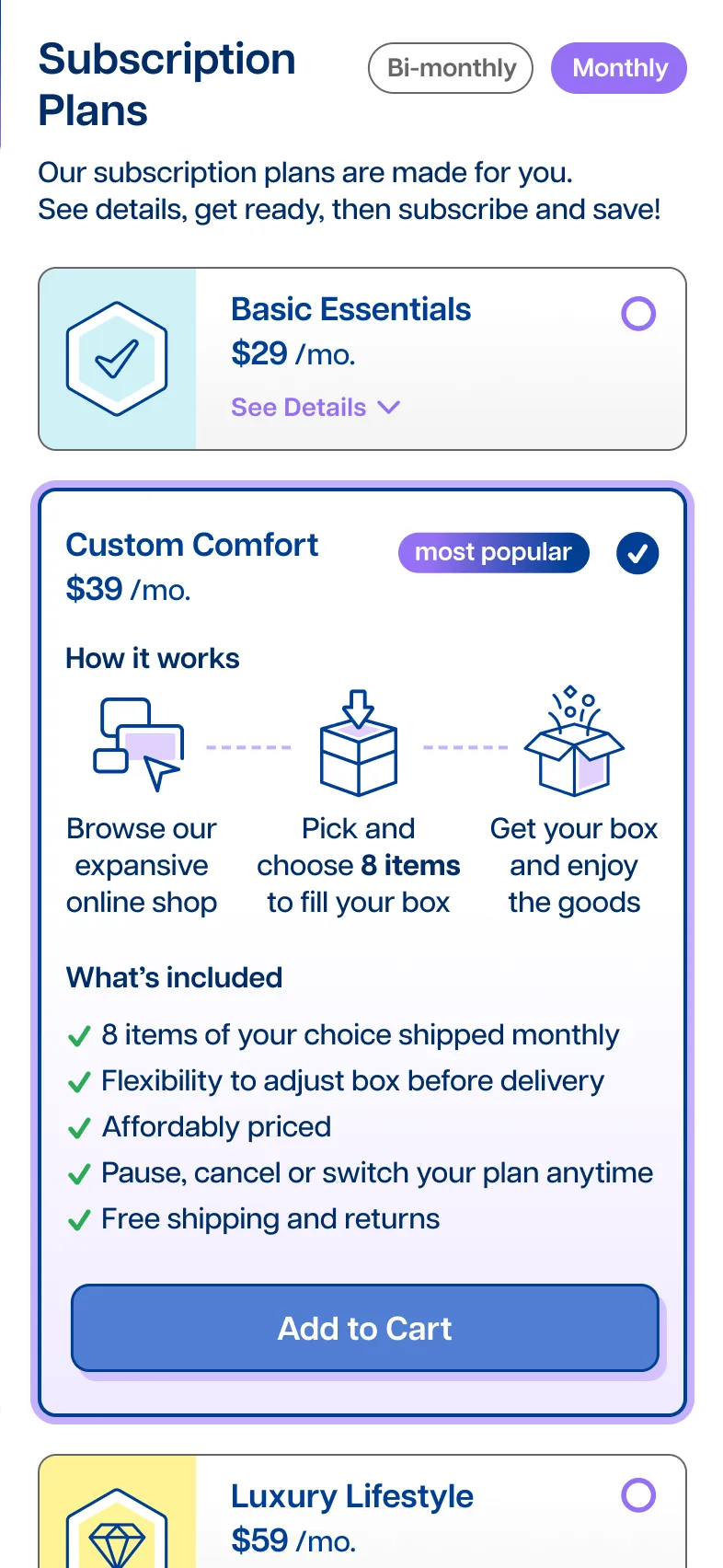
The subscription flow gained clearer structure through the addition of a progress bar, more spacing, reduced navigation clutter and expanded plan details.

Wireframe
Mid-fidelity
High-fidelity
Why it changed

The ability to expand each plan to show details and how it works gives users important information and confidence during selection.

Reflection

What this project taught me.

Travelbox taught me that solving relocation challenges goes beyond logistics. The strongest opportunities came from reducing uncertainty around what a rental included, what users needed and how they could settle in more comfortably once they arrived.

The project also reinforced the value of guided decision-making. Personalization, plan transparency and trust-building moments all played an important role in making the subscription flow feel more useful and approachable.

Given more time, I would refine how recommendations are presented after onboarding, add clearer examples of plan contents and expand support features across the product experience.

View the Figma prototype

View the Figma prototype

View the Figma prototype

Travelbox taught me that solving relocation challenges goes beyond logistics. The strongest opportunities came from reducing uncertainty around what a rental included, what users needed and how they could settle in more comfortably once they arrived.

The project also reinforced the value of guided decision-making. Personalization, plan transparency and trust-building moments all played an important role in making the subscription flow feel more useful and approachable.

Given more time, I would refine how recommendations are presented after onboarding, add clearer examples of plan contents and expand support features across the product experience.

Designed in L.A. 🌴 with love 🤟

© 2026 Work with Gina

Designed in L.A. 🌴 with love 🤟

© 2026 Work with Gina

Designed in L.A. 🌴 with love 🤟

© 2026 Work with Gina